

If your driveway went in when the house was built (and on the Coast that often means the 1970s, 80s or 90s) it has probably copped decades of salt air, sun, oil drips and tree roots. The concrete underneath is usually still structurally fine. It just looks tired. Resurfacing restores that slab to better-than-new for a fraction of what ripping it out and re-pouring would cost.
We are Central Coast Concrete Revival, a referral service for driveway restoration on the Central Coast. We don’t carry out the work. Every job is quoted and completed by independent local contractors who work on Coast driveways week in, week out.
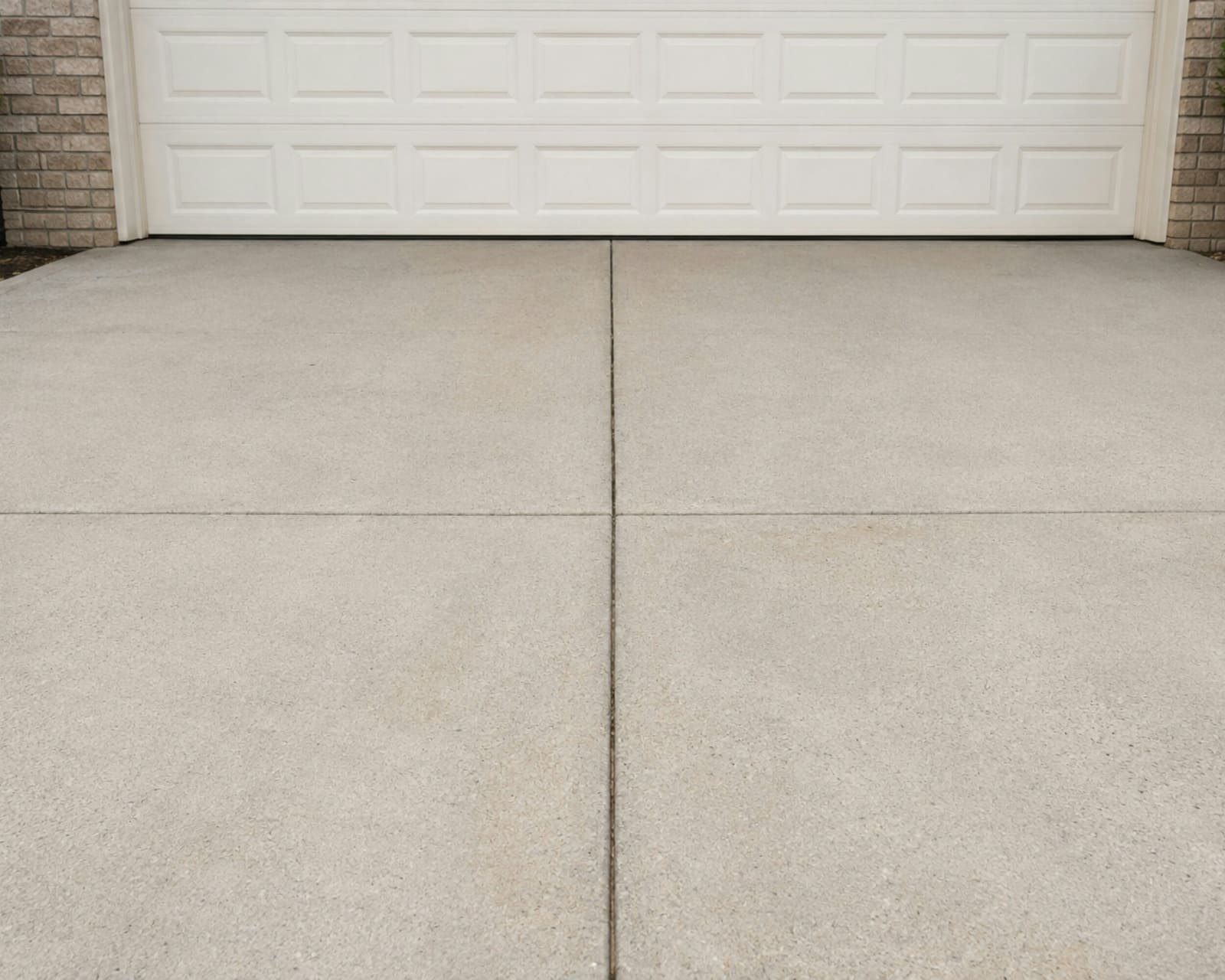
AI-generated illustrative example of the type of work, not a photo of a completed job.
What driveway resurfacing actually involves
Resurfacing is not painting over problems. It is a proper mechanical rebuild of the wearing surface:
- Pressure cleaning and degreasing to strip decades of grime, mould and oil so the new surface can bond.
- Crack treatment: cracks are routed out, filled with flexible repair compounds and, where needed, reinforced with mesh tape so they do not telegraph straight through the new finish.
- Grinding or acid etching to open the pores of the old concrete and create a mechanical key.
- A polymer-modified overlay or spray-applied coat, typically a few millimetres thick, applied in your choice of colour and texture. On the Coast textured finishes are the usual recommendation because slip-resistant results are achievable: a real consideration on wet mornings and steep blocks.
- Coastal-grade sealing. Salt air and humidity break down cheap sealers noticeably faster here than inland; our guide on why sealer peels faster on Central Coast driveways explains the mechanism, which is why the final sealer coats here are chosen for coastal exposure, not just price.
The result is a driveway that looks freshly laid, hides old stains and patchwork, and is protected against the weather that wrecked it in the first place.
Not sure which finish? Pick your surface in the finish selector and compare systems side by side: slip resistance, upkeep, and what each one can hide. Choosing there pre-fills your enquiry.
Concrete overlays: the layer that does the work
A concrete overlay is the new wearing surface itself: a polymer-modified cement product, usually a few millimetres thick, bonded to the prepared slab and finished in the colour and texture you choose. “Concrete overlay” and “resurfacing” get used interchangeably on the Central Coast, and for a driveway they describe the same buying decision either way: keep the slab you have, replace the surface on top of it.
The polymer modification is what makes a few millimetres viable. Plain cement spread thinly over an old driveway would craze and lift within a season; the polymers give the mix the flexibility and the adhesion to sit that thin over a slab that expands, contracts, heats up in summer and carries a car every day.
Overlays are applied several different ways, and the method drives the finished look more than the product name does:
- Spray-applied. The mix is sprayed and then finished, usually with a stencil pattern or a plain texture. This is the most common driveway choice on the Coast: see spray-on concrete.
- Trowel-applied. Laid and worked by hand for a smoother, more seamless surface, and the usual route to a stone or flagged look.
- Stamped or textured. The wet overlay is impressed with a pattern that imitates pavers, slate or timber.
- Exposed aggregate overlay. A decorative stone finish laid over the existing slab rather than poured as a new one.
Which of those suits your driveway depends on slope, what is on the slab now and the look you are after. Our guide to decorative concrete overlay types sets the systems out side by side so you can see where each one is normally used.
One caveat worth stating plainly: an overlay is a surface, not a structural repair. It restores a sound slab beautifully and it cannot rescue a failing one, which is what the next section is about.
Is my driveway too far gone to resurface?
Central Coast Concrete Revival driveway resurfacing suits most Coast driveways, because cracking, staining and fading are surface problems, not structural failure, and the concrete underneath is usually still sound. Resurfacing is not the right call when a slab is badly sunken, heaving from tree roots or crumbling right through, and an honest inspection will say so rather than coat over a failing slab.
Resurfacing suits you if:
- The slab is cracked, stained or faded but still solid: surface problems, not structural failure.
- You have an original 70s-90s driveway on a brick home in places like Woy Woy, Narara or Killarney Vale and want it to match a renovated house.
- You are preparing to sell and want street appeal without a five-figure replacement bill: see our pre-sale concrete resurfacing page if you’re weighing up the driveway alongside the garage floor and pool surround.
- Your steep drive around the Gosford or Terrigal hills gets slippery when wet and you want a finish with more grip.
- Quotes to demolish and re-pour have made your eyes water.
It is not the right call when a slab is badly sunken, heaving from tree roots, or crumbling right through: in those cases we will tell you straight that resurfacing would be throwing good money after bad. Our guide on resurfacing versus replacing concrete walks through how to tell the difference.
Our process, step by step
- Enquiry. Send photos through our quote form. Photos of the worst cracks and stains help us give you a realistic early estimate.
- Site inspection. An independent local contractor visits, checks the slab for drummy (hollow) spots, measures the area and slope, and looks at drainage and access: narrow battle-axe blocks and steep Coast driveways change how the job is staged.
- Formal written quote with your colour and texture options. All pricing is confirmed at this stage; nothing on this page is a fixed price.
- Preparation day. Pressure cleaning, degreasing, crack repair and grinding. Any waste slurry is contained and disposed of responsibly rather than washed into street drains.
- Application. The overlay or spray coat goes down, usually over one to two days depending on size and weather. Coastal humidity affects cure times, so contractors watch the forecast and will reschedule rather than trap moisture under a coating.
- Sealing and handover. Two sealer coats, then a walk-through with you. You will typically be asked to keep foot traffic off for around 24 hours and cars off for several days: your contractor confirms exact times for the product used.
Resurfacing an existing residential driveway generally does not need council approval, but if your project involves changing the crossover (the section over the footpath) or drainage, check with Central Coast Council first: rules vary. Your contractor can point you in the right direction.
How much does driveway resurfacing cost on the Central Coast?
Central Coast Concrete Revival driveway resurfacing typically costs $2,500 to $8,000+ for a single or double driveway, with large, steep or heavily cracked slabs sitting at the top of that range. The exact price depends on size, condition, slope and finish choice, and every job is confirmed with a formal quote after an independent local contractor inspects the concrete in person.
Every driveway is different, but the price levers are consistent:
- Size: cost scales with square metres, though small jobs carry minimum-callout economics.
- Condition: heavy cracking, spalling and oil contamination mean more prep hours.
- Slope and access: steep Gosford-style drives take longer and need more careful staging.
- Finish choice: a single-colour finish costs less than stencilled patterns or multi-colour decorative work.
- Old coatings: previously painted or sealed driveways may need full grinding back first.
Indicative price guide
These are indicative guide ranges only, based on typical Australian resurfacing pricing. Your actual price is confirmed after a site inspection and formal quote.
| Job type | Indicative range (guide only) |
|---|---|
| Single driveway, sound condition | $2,500-$4,000 |
| Double driveway, standard prep | $3,500-$6,000 |
| Large, steep or heavily cracked driveway | $6,000-$8,000+ |
| Decorative/stencilled upgrade on any of the above | Add roughly 10-25% |
For a deeper breakdown of what drives these numbers, read our Central Coast concrete resurfacing cost guide.
What’s included, and what may cost extra
Typically included in a resurfacing quote:
- Pressure cleaning, degreasing and surface grinding
- Standard crack repair
- The overlay or spray system in your chosen colour and texture
- Two coats of coastal-grade sealer
- Waste containment and site clean-up
May cost extra (always itemised in the quote, never sprung on you):
- Repairing large sections of drummy or delaminated concrete
- Levelling significant dips or trip edges
- Removing thick old paint or failed coatings
- Extending the driveway or new concrete sections (we refer this to independent local contractors as separate work)
- Tree-root damage requiring cut-out and re-pour of affected panels
Related services and where we work
If you want a patterned, stencilled look rather than a plain colour, see our spray-on concrete finishes. If your driveway is structurally good and just weathered or stained, a cheaper grind, recolour and reseal may be all it needs.
We arrange driveway resurfacing across the whole Central Coast: from steep blocks around Gosford, across the Peninsula around Woy Woy, up to Wyong and Tuggerah in the north. Driveways are the most-requested job here, though they are only one part of what we cover: see the full range of concrete resurfacing on the Central Coast.
Driveway resurfacing FAQs
How long does a resurfaced driveway last?
With decent prep and coastal-grade sealing, resurfaced driveways commonly give many years of service, with a reseal every few years to keep the protection up. Salt air is the enemy: resealing on schedule matters more here than inland.
Will the cracks come back?
Hairline surface cracks are treated and rarely reappear. Structural cracks that move seasonally can eventually mirror through any coating, which is why the inspection stage is honest about what resurfacing can and cannot fix.
Can you resurface a steep driveway?
Yes: steep drives around Gosford, Springfield and the Terrigal hills are a big part of Coast work. Textured, slip-resistant finishes are achievable and usually recommended on any serious gradient.
How long before I can drive on it?
Typically foot traffic after about 24 hours and vehicles after several days, depending on the product and the weather. Your contractor gives exact cure times at handover.
Is resurfacing cheaper than replacing the driveway?
Usually substantially: often a third to a half of the cost of demolition and a new pour, provided the existing slab is sound. The inspection confirms whether yours qualifies.
Do I need council approval to resurface my driveway?
Resurfacing the existing slab on your own property generally doesn’t, but anything touching the council crossover or street drainage can: check with Central Coast Council, as rules vary.
Get your driveway back
Ready to stop apologising for the driveway? Use the form below: add a couple of photos and your suburb and we will come back to you fast with realistic next steps.